Legal SEO and Lawyer Advertising: A Careful Content Review Framework — Melbourne, Victoria
Legal SEO advertising compliance in Melbourne, Victoria depends on reviewing every website claim, testimonial, specialist statement and SEO element for accuracy and potential to mislead. SEO-for-Lawyers.com.au applies a structured content review through On-Page SEO For Law Firms, Law Firm Website Design and Business Profile Optimization.
What Australian Advertising Rules Mean for Law Firm SEO
Australian legal advertising compliance requires lawyer advertising to present accurate, supportable information and avoid a misleading impression. The same duty applies across law firm websites, search results, online advertising and professional conduct communications.
Australian lawyer advertising must present accurate, supportable information and must not create a misleading impression through wording, layout, search content or omissions. A page can create risk through an exaggerated claim, an unclear qualification or content that suggests a result without proper context.
We review legal SEO as part of the wider advertising message. That review considers the visible website copy, headings, calls to action, search snippets and the information a prospective client may reasonably take from the page.
How We Review SEO Content for Misleading Claims
SEO content review checks whether each page gives a fair and accurate answer to the searcher’s need. We connect the wording with the legal service, search intent and the evidence available to support each advertising claim.
Our On-Page SEO For Law Firms process examines the page as a complete advertising message. We also check whether landing pages and metadata repeat, weaken or change the meaning of the main website copy.
Claim Accuracy and Supporting Context
Factual claims should be accurate, current and supported by material that matches the statement. We review claims about legal services, case outcomes, experience and comparisons to ensure the surrounding context does not make the statement stronger than the available support.
Case outcomes need particular care because one client outcome may not indicate what another prospective client can expect. We check whether website copy explains the relevant circumstances and avoids implying a guaranteed or typical result.
Specialist and Expertise Statements
Specialist claims should describe professional expertise accurately and use wording that suits the relevant jurisdiction. We review titles, practice-area descriptions and statements about expertise for clarity and support.
Legal expertise can be explained through the work a firm performs, the matters it handles and the information it provides. We also check whether a heading, menu label or search snippet gives a broader impression than the full page supports.
Can Law Firms Use Specialist Claims in Online Advertising?
Yes, law firms can use specialist wording only when the statement is accurate, properly qualified and unlikely to give prospective clients a misleading impression.
We assess the claim against the firm’s actual practice areas, professional expertise and jurisdictional wording. The review covers visible website copy, online advertising, metadata and search content because a shortened statement can change the meaning of the full description.
Law firms serving overlapping legal needs in Melbourne, Victoria face sustained competition for online visibility. That makes careful keyword targeting and clear content differentiation important, particularly when a search term could suggest a level of expertise that the page does not explain.
How Client Testimonials and Reviews Should Be Checked
Client testimonials and online reviews can be published only when the content is genuine, relevant, authorised for publication and presented without a misleading implication about likely results.
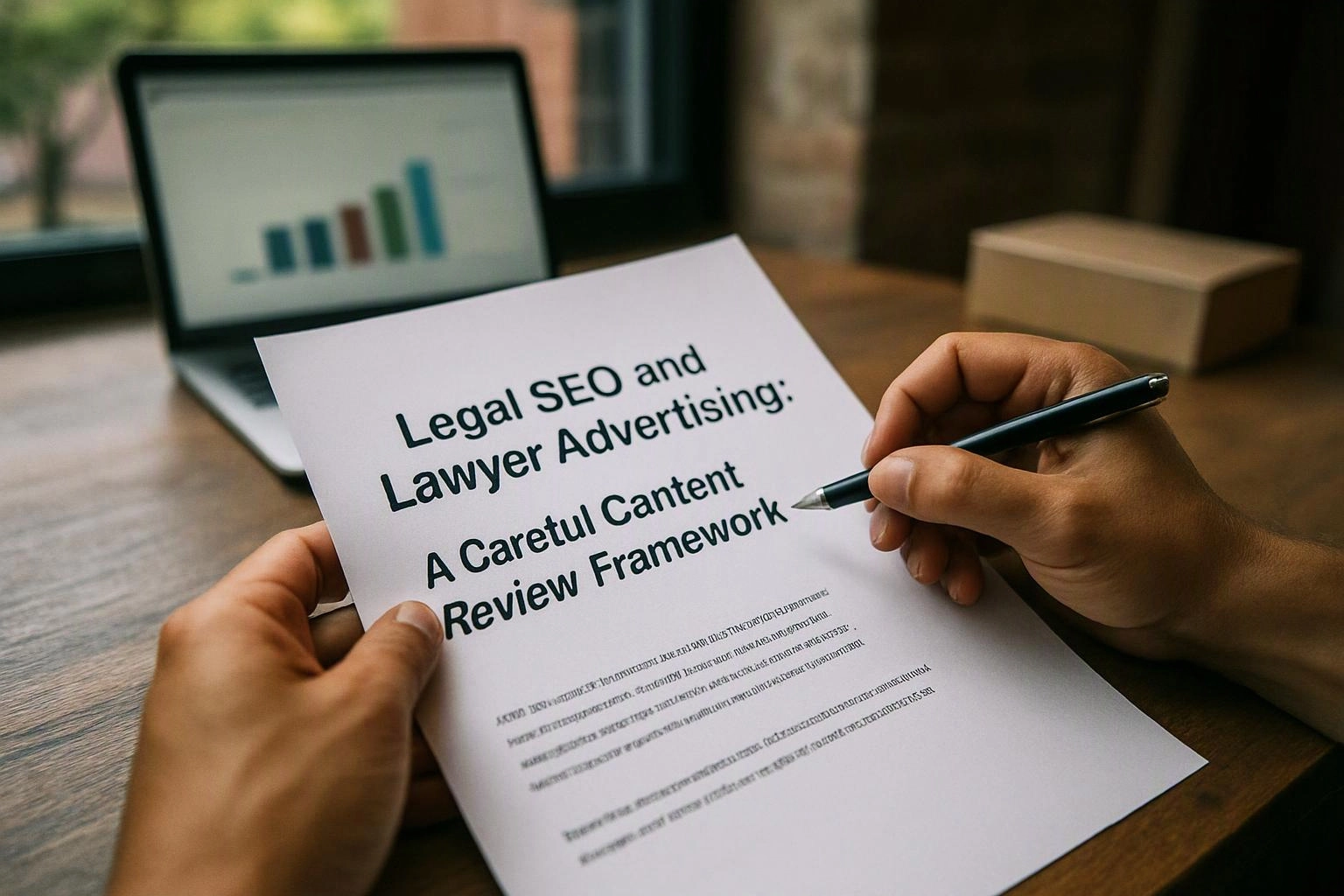
We review testimonials on law firm websites, Google Business Profile listings and other review platforms as advertising representations. Our check considers the wording, the context supplied with the review and whether a reader could mistake an individual experience for a promise about future results.
Review content should also be handled with care where legal matters are sensitive. Confidentiality and client consent remain important parts of a responsible testimonial review.
Where SEO Compliance Issues Appear Across a Law Firm Website
Law firm websites can raise advertising compliance issues across both prominent pages and small search elements. We review each part according to the impression it may create for a prospective client.
The table below shows the areas we commonly bring into an SEO content review. Each area can affect how a legal service, practice area or advertising claim is understood.
| Website area | What we check |
|---|---|
| Service pages | Whether the legal service description is accurate, clear and properly qualified. |
| Practice-area pages | Whether the page matches the practice area and the searcher’s likely intent. |
| Title tags | Whether the search result wording accurately represents the page. |
| Meta descriptions | Whether the summary contains a fair and supportable advertising message. |
| Internal links | Whether anchor wording creates an inaccurate impression about the linked service. |
| Business Profile Optimization | Whether business descriptions, categories, updates and review content remain consistent. |
How Website Design Supports Safer Legal Advertising
Law Firm Website Design supports safer legal advertising when the content hierarchy makes qualifications, service limits and next steps easy to understand. We review navigation, headings and calls to action as part of the complete page message.
Disclaimers can add useful context when they are clear and placed where a reader will see them. A disclaimer should not be used to conceal a prominent claim that is misleading on its own.
Mobile user experience also matters because a small screen can hide qualifications, split related wording or make a call to action appear stronger than the surrounding information. We check the layout across the page journey so the content remains clear as users move from a search result to a service page.
How We Keep SEO Growth Aligned with Advertising Compliance
Content governance keeps SEO growth aligned with advertising compliance by giving the firm a repeatable way to review new and changed content. We connect keyword targeting with the actual legal service and check whether the proposed wording is accurate for the intended audience.
Our legal marketing review can cover website copy, landing pages, metadata, online advertising and Business Profile Optimization. We assess whether each item supports a clear search purpose without overstating professional expertise, client outcomes or the scope of legal services.
Melbourne, Victoria has sustained competition among firms serving overlapping legal needs. Our review therefore considers both content accuracy and useful differentiation, so visibility work does not depend on claims that could create a misleading impression.
We can also apply the same review approach to a broader advertising content audit. The work may include On-Page SEO For Law Firms and Law Firm Website Design where the website structure or search content needs to change.