Internal Linking and Navigation Mistakes on Law Firm Websites
Internal linking and navigation mistakes on law firm websites can isolate practice-area pages, waste crawl paths and make legal information harder to reach; SEO-for-Lawyers.com.au audits the site structure, repairs link paths and improves navigation around search intent.
Why Internal Links Matter for Law Firm SEO
Internal links help search engines discover related legal pages and help prospective clients move from broad legal topics to relevant services.
Internal linking connects pages within a law firm website. These connections give search engines more context about related legal content, practice areas and the importance of each page.
Good links also support user journeys. A visitor reading about a legal issue can move naturally to a relevant practice area page, service explanation or enquiry page. Clear paths improve page discovery and make the site easier to use.
Strong linking supports crawlability because search engine crawlers can follow connected crawl paths. An XML sitemap can assist discovery, but it does not replace useful links between related pages.
The Law Firm Internal Linking Mistakes We Check First
An internal linking audit shows whether important legal pages can be reached through sensible site links. We assess both search engine crawling and the way a prospective client moves through the website.
The table highlights the mistakes that most often weaken discoverability, relevance and navigation.
| Mistake | Why it matters | Typical repair |
|---|---|---|
| Orphan pages | Important pages lack useful paths from the rest of the site. | Add relevant contextual links and review the page hierarchy. |
| Broken links | Visitors reach dead ends and search engines encounter 404 errors. | Repair the destination or validate a suitable redirect. |
| Vague anchor text | The link gives little information about its destination. | Use clear wording that matches the linked page and search intent. |
| Disconnected service pages | Relevant legal services receive weak topical and navigational context. | Connect practice areas with related articles and service pages. |
| Hidden navigation | Visitors struggle to reach important content. | Simplify menus and make the website hierarchy clearer. |
Mistake: Leaving Practice Area Pages Orphaned
An orphan page is a page with no meaningful internal links from other pages on the website. A practice area page can remain listed in an XML sitemap and still have weak crawlability if visitors and crawlers cannot reach it through the site structure.
Orphan pages often arise after a redesign, a new service launch or changes to the navigation menu. We repair the problem by adding contextual links from relevant legal content, related services and suitable navigation areas.
The work can involve reviewing the page hierarchy and deciding which links best support search intent. The cost of the work depends on the number of affected pages, the quality of the existing structure and the amount of content that needs updating.
Mistake: Publishing Broken Internal Links
A broken internal link sends a visitor to an unavailable destination, often producing a 404 error. Broken paths interrupt the user experience and can prevent search engines from reaching related legal content.
Broken links commonly appear after page deletions, URL changes or incomplete redirects. We check the destination URL, repair the link where the original page still exists and validate redirects where the content has moved.
The cost depends on the size of the link inventory, the number of broken destinations and whether related content also needs updating. Repairing the links protects the practical value of the site’s link structure.
Mistake: Using Vague or Repetitive Anchor Text
Anchor text is the visible wording used for an internal link, and descriptive anchor text tells users and search engines what the destination covers. Labels such as “read more” provide little context when used without supporting wording.
We review links for clarity, repetition and alignment with legal service keywords. The wording should match the destination and support the reader’s search intent without sounding forced.
The work cost depends on how many links need review and whether the surrounding legal content also needs editing. Clear anchor text can improve accessibility because users can understand a link without guessing its destination.
Mistake: Linking Every Page to the Same Destination
Linking every page to the same destination weakens link relevance and prevents the internal link distribution from reflecting the site’s real priorities. A general link from unrelated content may not help a visitor who needs a specific legal service.
We match links to topical relevance, page purpose and the next useful step in the user journey. Conversion pages should receive relevant links, but they should not replace links to supporting information and related practice areas.
The cost depends on the complexity of the site architecture and the amount of redistribution needed. A focused link structure gives search engines better context and gives visitors more useful choices.
Mistake: Hiding Important Pages in the Navigation
Important legal service pages become difficult to discover when the main navigation hides them behind unclear dropdown menus or overly broad labels. Poor information architecture can make a law firm website feel harder to navigate than its content requires.
We review the navigation menu, dropdown behaviour and mobile presentation. We then assess whether the legal service pages are visible in a logical part of the website hierarchy.
The cost depends on the menu structure, the number of pages involved and whether template changes are required. Clear navigation reduces friction for users who are still deciding which service matches their needs.
Mistake: Separating Related Legal Topics Without Contextual Links
Related legal content loses context when pillar pages and supporting articles do not link to one another. Topic clusters work best when the connections show how broad information relates to a particular practice area.
We identify useful links between legal guides, practice area pages and related content. Each link should help the reader continue their research and understand the relationship between the topics.
The cost depends on the amount of content in the cluster and the editorial work needed to place relevant links. Contextual relevance improves both page discovery and the path towards a suitable service page.
Mistake: Creating Deep or Confusing Navigation Paths
Deep or confusing navigation paths make important pages harder to reach and can weaken crawl paths. Excessive click depth often reflects an unclear practice area taxonomy or a website hierarchy that has grown without review.
We assess the route from the home page and broad legal topics through to specific services. Breadcrumb navigation can provide helpful page context when it reflects the actual hierarchy and uses clear labels.
The cost depends on the number of templates, menu levels and pages affected. We focus repairs on paths that carry important search intent and lead journeys.
Mistake: Ignoring Internal Links After URL Changes
URL changes can leave internal links pointing to old addresses, redirected URLs or unsuitable replacement pages. A URL migration can therefore create broken paths even when redirects are present.
We check internal redirects, canonical URLs and links within updated content. We also confirm that the new destination matches the original search intent and does not create an unnecessary chain of redirects.
The cost depends on the size of the migration, the number of internal links and the amount of content requiring updates. Ongoing link maintenance helps prevent the same problems after future website changes.
How Each Internal Linking Mistake Affects a Law Firm Website
Internal linking mistakes affect organic visibility, page discovery and user navigation at the same time. A search engine may have difficulty understanding a service page while a prospective client struggles to reach it.
Weak links can separate legal content from the service it supports. Broken paths can stop a lead journey, and unclear labels can make a relevant page appear less useful than it is.
We assess each issue against search intent, topical relevance and the next step a visitor is likely to take. This keeps repairs focused on both search performance and practical user experience.
How We Audit and Repair Law Firm Internal Links
Our technical SEO audit reviews the complete law firm website so that links are assessed as part of the wider website architecture. We connect the findings to the pages and journeys that matter most.
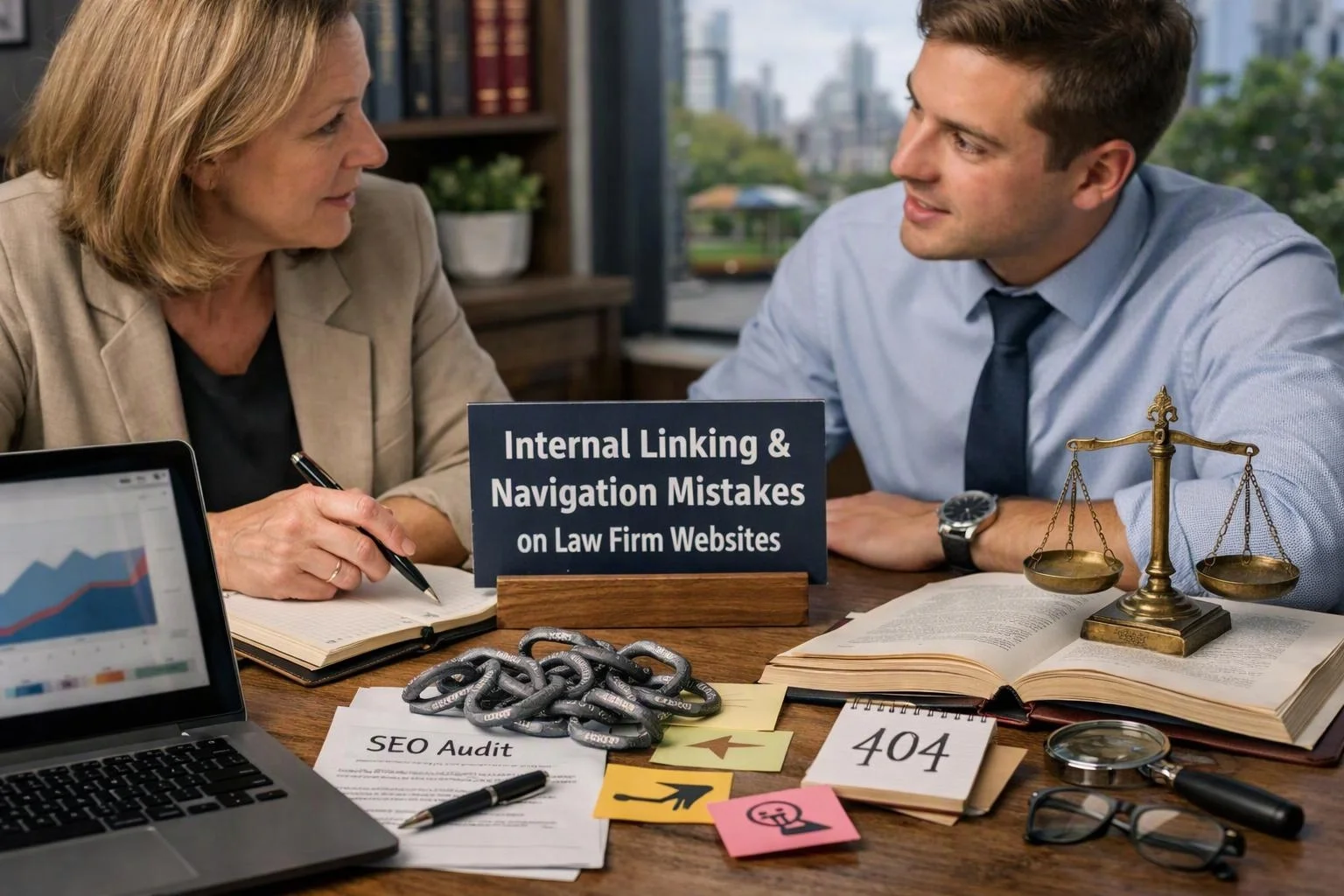
The repair plan depends on the site’s structure, content quality and technical condition. We explain the work included before changes are made.
When to Call SEO-for-Lawyers.com.au for an Internal Linking Audit
An internal linking audit is useful when important legal content is difficult to reach or the site structure has changed. We can review the issue as part of a wider law firm SEO strategy.
These issues often overlap, so we review the complete link structure rather than treating one isolated link as the whole problem.
How to Keep Law Firm Internal Links Healthy
Content governance keeps internal links accurate as the law firm website changes. Every new page should have a clear role, a suitable destination and a place within the website hierarchy.
We recommend setting internal linking standards for anchor text, related content, practice area links and navigation menu links. These standards should reflect search intent and the likely user journey.
Link maintenance should form part of website changes, content reviews and URL updates. Our On-Page SEO For Law Firms work can help keep links aligned with page purpose as legal content develops.
What Our Internal Linking Work Includes
SEO-for-Lawyers.com.au reviews the existing link structure, identifies priority repairs and explains the work included in the estimate; Free Estimates Available.
Our Technical SEO For Law Firms work can cover crawl analysis, broken internal links, redirects, canonical URLs and orphan page discovery. We also review navigation architecture, contextual internal links and the relationship between legal services and supporting content.
Our internal linking strategy is shaped by the site’s information architecture and the search intent behind each page. We provide an estimate based on the pages, templates, navigation elements and repairs involved.
Questions About Law Firm Internal Linking
How do I find orphan pages on a law firm website?
Orphan pages can be found by comparing a crawl of internal links with the site’s page inventory and XML sitemap. We then check whether important pages have useful contextual or navigation links from relevant content.
Should every law firm blog post link to a practice area page?
No, every blog post should not link to the same practice area page. A blog post should link to a practice area page when the destination is relevant to the topic and gives the reader a useful next step.
How can I check whether internal links point to redirected URLs?
Internal links can be checked by crawling the website and comparing each destination with its redirect response and final canonical URL. We update links where a direct link to the final relevant page is available.
Can internal links affect how Google understands a law firm's services?
Yes, internal links can affect how Google understands the relationship between legal services, practice areas and supporting content. Relevant links and descriptive anchor text provide useful context for page discovery and topical relevance.